Can't find what you're looking for? Get in touch!


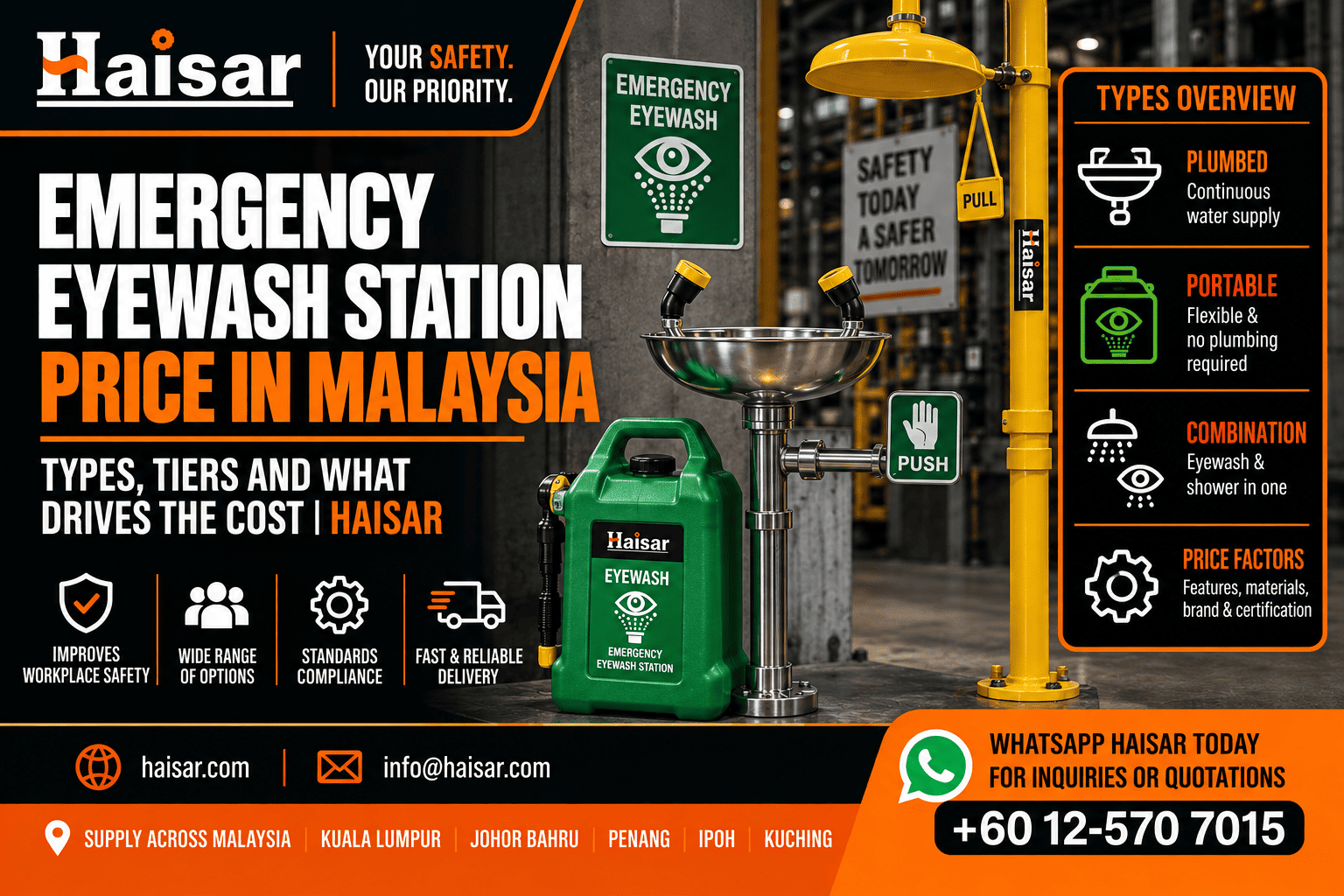
There is no single price for an emergency eyewash station in Malaysia, because the category spans four genuinely different products from a self-contained portable bottle unit that needs no plumbing at all, up to a floor-mounted combination eyewash and shower station built to ANSI/ISEA Z358.1's full 15-minute flush requirement. A portable unit for a small workshop and a plumbed combination station for a chemical handling area solve different compliance obligations, not just different budgets. This page explains what actually drives the price, how many stations a site needs, and what a cheap unit is quietly missing.
Buyers searching for an eyewash station price are usually responding to one of two triggers: a DOSH inspection or internal audit that flagged a missing or non-compliant station near a chemical handling point, or a new facility layout that needs coverage planned in from the start. As our chemical spill kit guide covers, response equipment for chemical handling is not optional once the hazard is present the question is which type of station is right for the location, not whether one is needed.
As with our other equipment pricing guides, this is written as ratios and cost drivers rather than fixed figures, because a published price goes stale fast. The ratios and the logic hold; ask us for the current amount against your actual layout and quantity.
What actually drives the price
Of those six, two deserve emphasis because they are where buyers most often economise and most often regret it.
Flow rate and duration. ANSI/ISEA Z358.1 calls for a continuous 15-minute flush at a specified flow rate for a genuine eyewash or eye/face wash. A small bottle-fed unit or a portable tank with a limited reservoir may not sustain that duration — check the actual flush time the unit is rated for, not just whether it is labelled “eyewash.”
Material in a corrosive environment. A stainless steel bowl and fittings resist the corrosive splash the station exists to treat; an ABS plastic unit is a real option for lower-hazard areas but degrades faster where acids or alkalis are actually present, which shortens the useful life of exactly the equipment you need working when it matters.
The four types, and who needs which one
| Type | What you get | Right for | Watch out for |
|---|---|---|---|
| Portable self-contained | Gravity-fed tank (commonly 8 gallon), no plumbing required, wall-mountable | Low-hazard areas, temporary sites, or as interim coverage before plumbing is installed | Water must be changed on a documented schedule to stay usable — a full but stale tank is not compliant coverage |
| Mobile / larger-capacity portable | Larger tank (commonly 16 gallon) on a wheeled or mobile base | Work areas that shift location, or sites needing more flush duration than a small unit provides | Still needs the same water-change discipline as any self-contained unit — capacity does not remove that requirement |
| Plumbed wall-mounted | Stainless steel bowl connected to mains water, continuous supply, no refill schedule | Fixed chemical handling points, labs, and process areas with a permanent installation location | Confirm mounting height and the 6-inch obstruction clearance are met on installation, not just that the unit itself is compliant |
| Combination eyewash & shower | Floor-mounted, full-body deluge shower plus eyewash, ANSI/ISEA Z358.1 rated for 15-minute continuous flush | Chemical handling, process areas and anywhere a splash could cover more than the eyes and face | Requires proper drainage and a walking distance to the hazard within your site's response time target — the unit alone does not guarantee compliant placement |
Not sure which type your area needs? Tell us the chemical handled and whether plumbing is available and we will recommend a type — including saying so if a portable unit is only a stopgap. Ask for a recommendation →
How many stations your site actually needs
Unlike most PPE, eyewash and shower coverage is not primarily a headcount or bulk-order question — it is a placement question. The number of stations a site needs comes from mapping every chemical handling point and confirming each one sits within the response distance your risk assessment requires, commonly referenced against a roughly 10-second, 55-foot benchmark for corrosive chemical exposure. A large open floor with one chemical handling point at the far end may need only one well-placed station; a smaller area with several dispersed handling points may need more than one despite the smaller footprint.
Where bulk pricing does apply is on multi-site or multi-building rollouts — standardising on one type across several locations and ordering together is worth pursuing, but it should follow the placement map, not replace it.
The number that matters: cost per compliant station per year
Unit price is the wrong comparison here for a specific reason: an eyewash station that fails to deliver a compliant flush when it is actually needed has cost the full price of the unit for zero protection, which makes maintenance discipline as much a cost driver as the purchase price.
| Factor | Why it changes the annual figure |
|---|---|
| Water change schedule | Self-contained portable units need documented, regular water changes — typically weekly unless a preservative additive is used or the water itself becomes a contamination risk rather than a treatment. |
| Weekly activation testing | Plumbed units should be flushed weekly to clear sediment and confirm the valve still opens in a single motion and stays open a valve that has seized from disuse fails at the exact moment it is needed. |
| Corrosion and material fatigue | ABS plastic components degrade faster than stainless steel in an environment with genuine chemical exposure, shortening the realistic service life below what a temperate, low-exposure estimate would suggest. |
| Signage and access | A compliant station blocked by stored materials or without visible signage does not function as coverage even though the unit itself is intact this is a housekeeping cost, not an equipment cost, but it belongs in the same annual review. |
| Documentation for audit | A logged inspection and testing record is what turns “we have a station” into demonstrable compliance during a DOSH visit or an internal audit. |
Run those together and the honest annual cost of eyewash coverage is mostly a maintenance and documentation discipline layered on top of the purchase price, not a number the unit price alone predicts.
What a suspiciously cheap station is missing
- A stated flush duration and flow rate. Not a general “eyewash” label, an actual specification against ANSI/ISEA Z358.1's 15-minute continuous flush requirement.
- A single-motion, hands-free activation valve that stays open until intentionally closed — a unit requiring continuous hand pressure to operate does not meet the standard's intent.
- Correct mounting height and clearance specified in the installation instructions, not left for the installer to guess.
- Material suited to the actual environment. A plastic unit sold for a genuinely corrosive chemical handling area, with no stainless steel option mentioned, is a mismatch waiting to surface.
- A documented water-change or flush-testing schedule provided with the unit, not left to the buyer to figure out.
- Clear signage and accessory options such as a dust cover, so the station stays identifiable and protected between uses.
What we stock
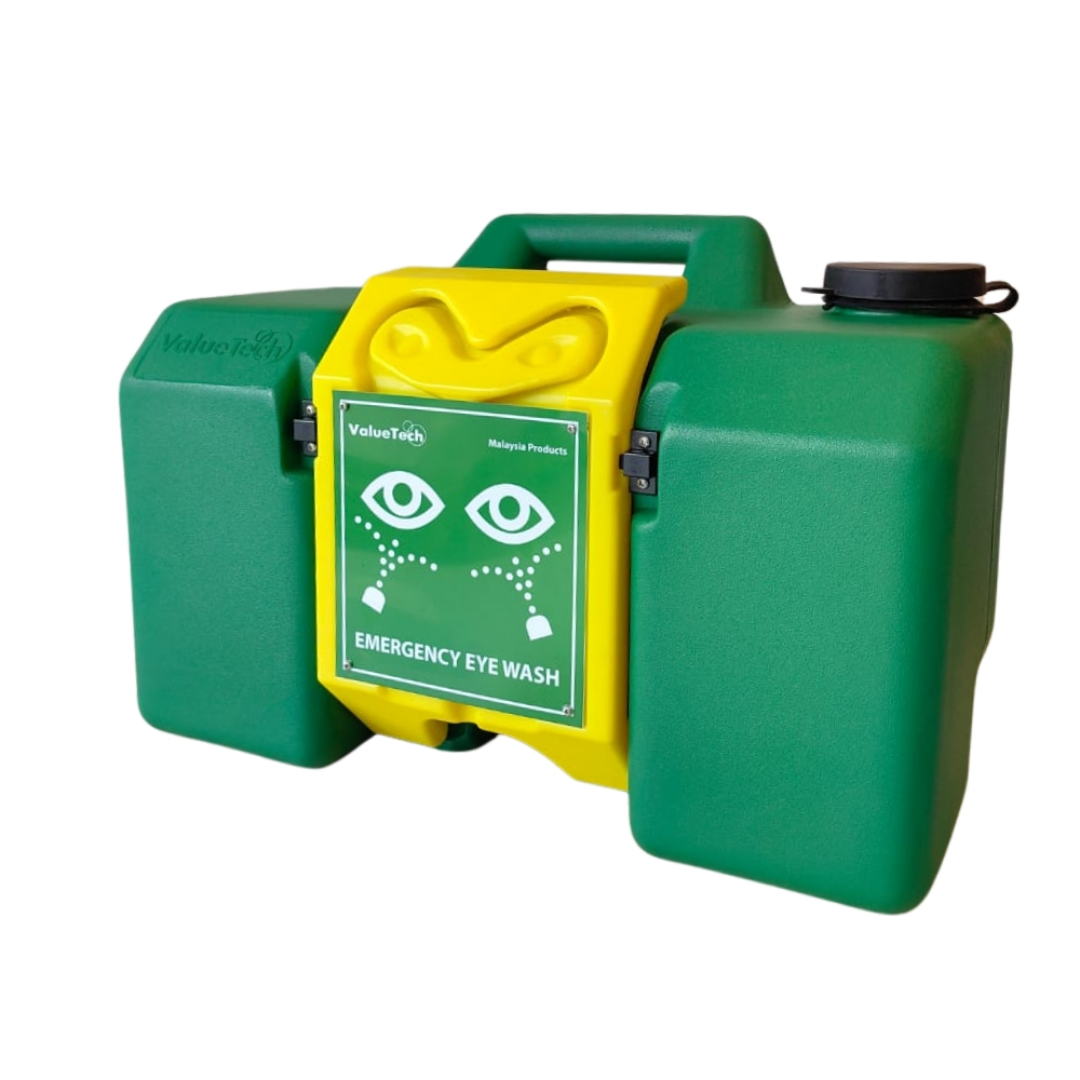
8 Gallon Portable Eyewash Station
Self-contained, gravity-fed, no plumbing required. The entry point for low-hazard areas or as interim coverage before a fixed installation.
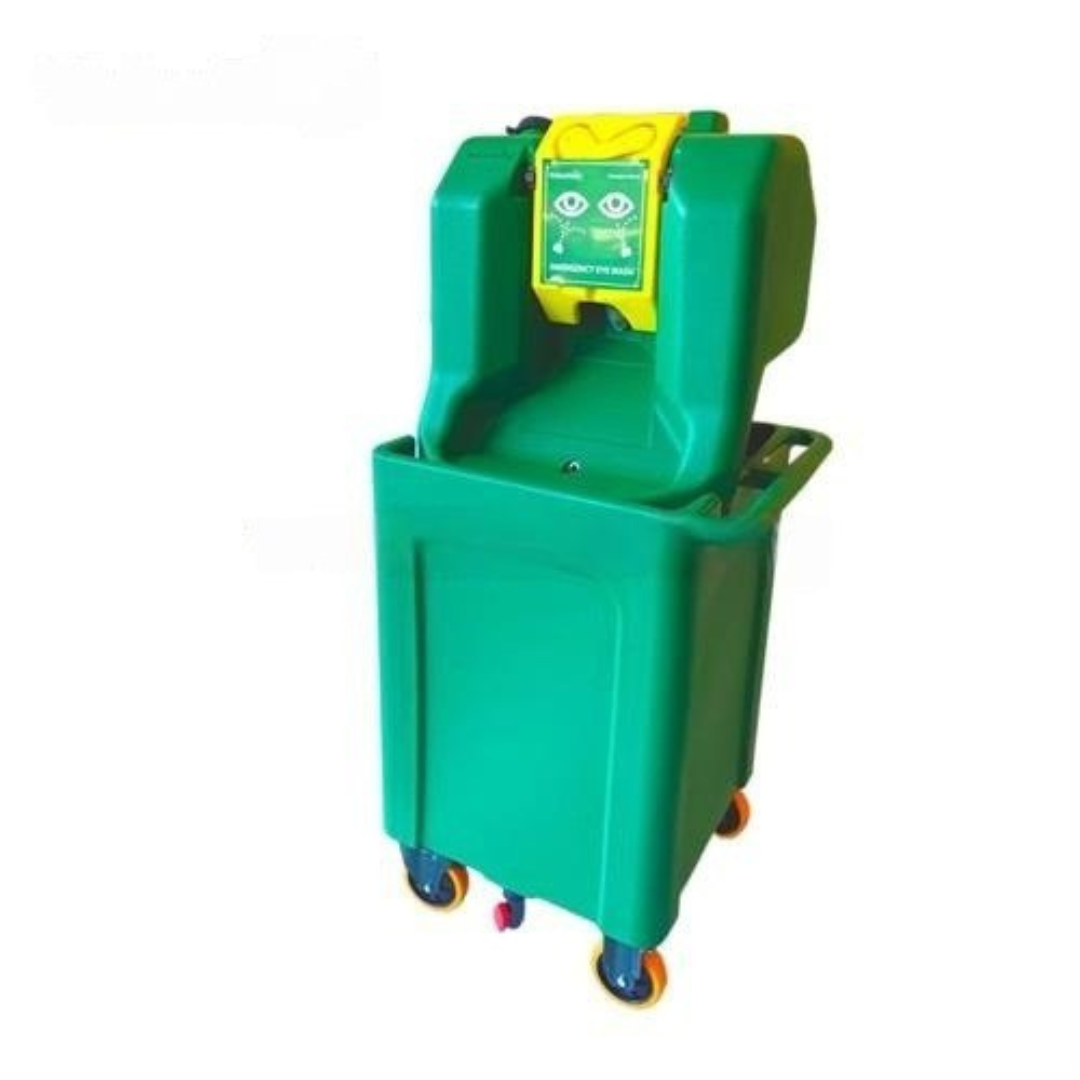
Mobile Portable Eyewash Station
Larger capacity on a wheeled base, for work areas that shift location or need more flush duration than a small unit provides.
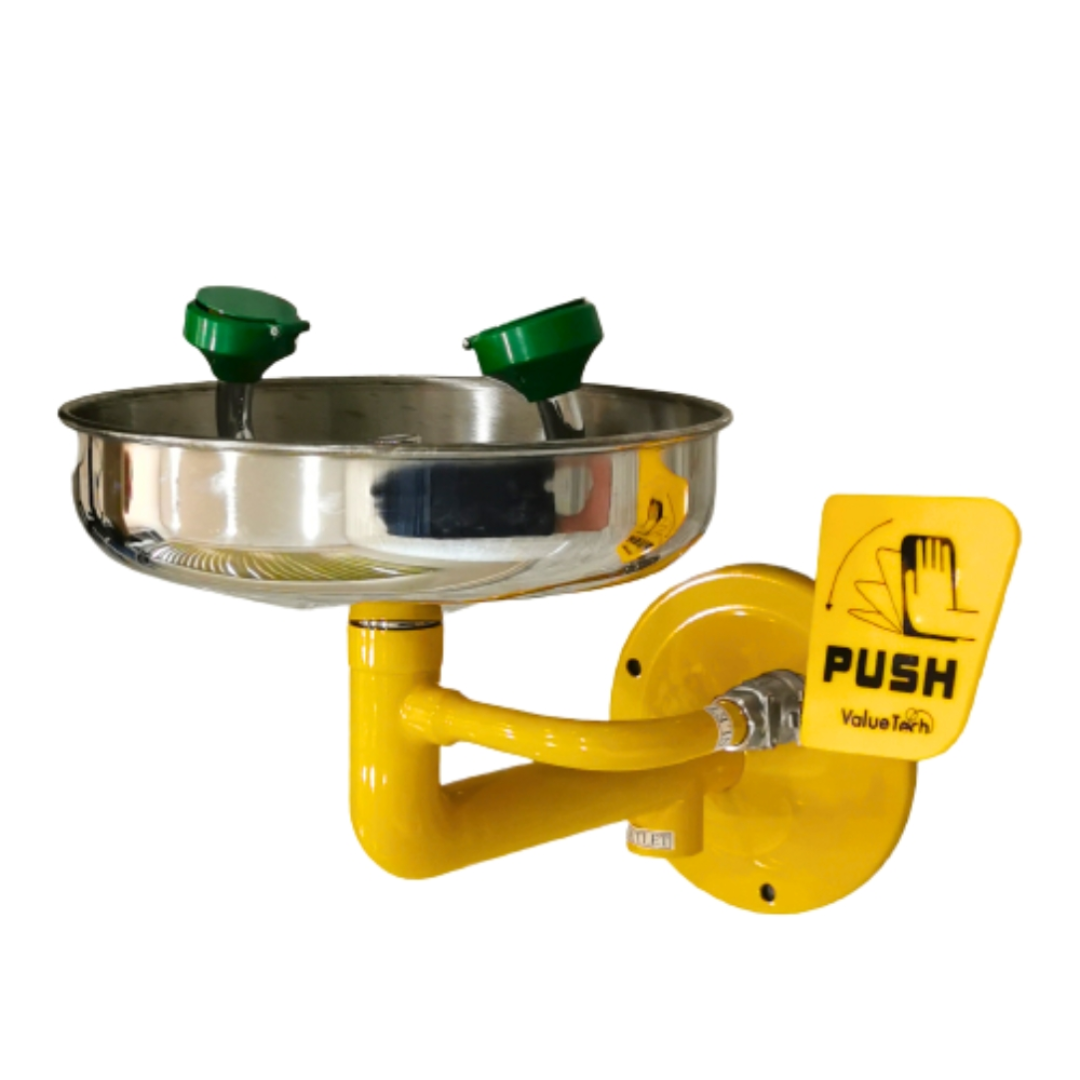
Wall-Mounted Stainless Steel Eyewash
Plumbed, continuous mains water supply, no refill schedule. For fixed chemical handling points, labs and process areas.

Combination Eyewash & Shower
Floor-mounted, full-body deluge shower plus eyewash bowl. For chemical handling areas where a splash could cover more than the face.
The full range also covers bench-mounted eyewash stations for lab settings, twin-head eyewash sprayers, replacement Plum eyewash solution, and eyewash & shower accessories including dust covers and signage 34 lines in total across the emergency responder range.
Get a real number against your layout
Tell us your chemical handling points, whether plumbing is available at each, and the quantity needed. We will come back with current pricing and the type that actually fits each location.
Haisar Supply & Services Sdn Bhd · No. 7501, Jalan Enggang 19, Bandar Putra, 81000 Kulai, Johor · Seremban branch 011-3307 7509 · contact details
Pricing questions
How much does an emergency eyewash station cost in Malaysia?
It depends entirely on type. Across the four types described above the range is roughly 4.5-fold, from a portable self-contained unit to a floor-mounted combination eyewash and shower station. Send us your layout and chemical handling points and we will give you a current figure, rather than a stale published number.
Do I need a portable unit or a plumbed station?
That depends on whether the chemical handling point is fixed and whether plumbing is available. A portable unit is a legitimate choice for low-hazard or temporary areas, or as interim coverage while plumbing is installed, but it is not a permanent substitute for a plumbed station at a fixed, ongoing chemical handling point it needs a documented water-change schedule to stay compliant in the meantime.
How many eyewash stations does my site need?
Coverage is a placement question, not a headcount question. Map every chemical handling point and confirm each sits within the walking-distance response time your risk assessment requires, commonly referenced against a roughly 10-second, 55-foot benchmark for corrosive exposure. A hazard outside every existing station's coverage needs its own station.
What maintenance does an eyewash station actually need?
Self-contained portable units need a documented, regular water change typically weekly unless using a preservative additive. Plumbed units should be activated weekly to clear sediment and confirm the valve opens and stays open correctly. Both need a logged inspection record for audit purposes.
Is a combination eyewash and shower always the safest choice?
It is the right choice specifically where a splash could reasonably cover more than the eyes and face, such as most chemical handling and process areas. For genuinely low-hazard areas it is more equipment and installation cost than the risk calls for the type should follow the hazard assessment, not default to the highest option.
Can you supply ANSI/ISEA Z358.1 compliance documentation?
Yes, on the lines that carry it. Ask at quotation stage and the documentation is issued with the delivery order, so your audit file is complete before a DOSH inspector or your internal safety team asks for it.
