Can't find what you're looking for? Get in touch!


Last reviewed: July 2026
Industrial safety equipment should never be selected from a generic shopping list. A construction site, chemical store, warehouse, electrical room and manufacturing line can all require different controls, even when they operate within the same company.
Under Section 18B of Malaysia’s Occupational Safety and Health Act 1994 employers, self-employed persons and principals must assess safety and health risks and implement controls where risks need to be eliminated or reduced. The practical starting point is therefore a documented HIRARC or another suitable risk-assessment process, followed by equipment selection based on the identified hazards.
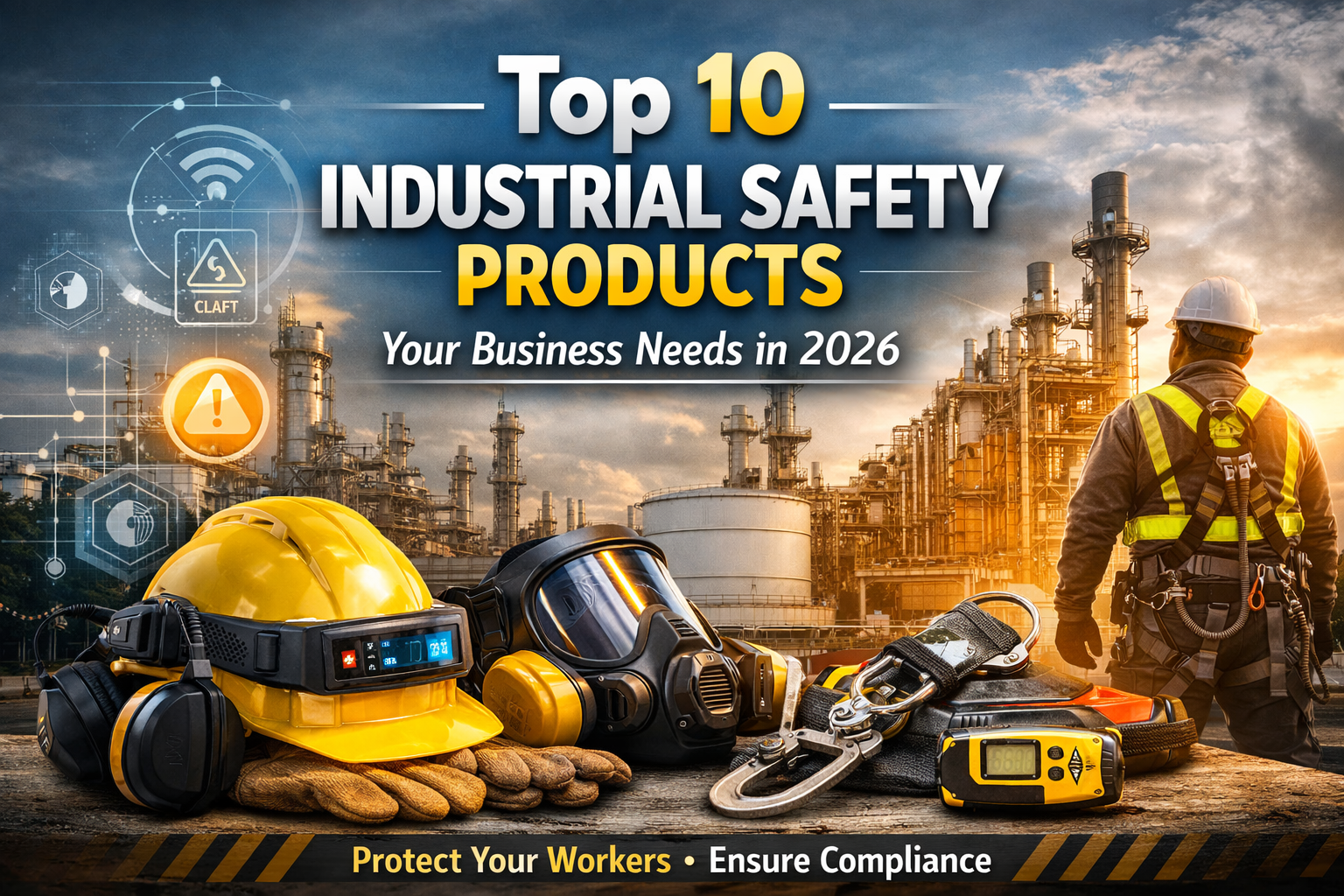
This guide covers ten major categories of industrial safety equipment commonly required across Malaysian factories, construction projects, logistics operations, utilities, workshops and maintenance environments. It does not mean that every workplace needs every item. The correct equipment package depends on the work activity, exposure level, site conditions, legal requirements, client specifications and manufacturer instructions.
|
Need a consolidated quotation for a site or facility? |
Quick selection guide
|
Equipment category |
Hazards addressed |
Common examples |
|
1. Head protection |
Falling or flying objects, impact, overhead obstructions and selected electrical hazards |
Industrial safety helmets, bump caps, chin straps and accessories |
|
2. Eye and face protection |
Dust, particles, liquid splash, chemicals, heat, radiation and impact |
Safety glasses, goggles, face shields and welding protection |
|
3. Hearing protection |
Hazardous occupational noise |
Earplugs, earmuffs and helmet-mounted hearing protection |
|
4. Respiratory protection |
Dusts, fumes, mists, gases and vapours |
Disposable respirators, half masks, full-face respirators and PAPRs where justified |
|
5. Hand protection |
Cuts, abrasion, puncture, heat, chemicals and electrical contact |
Cut-resistant, chemical-resistant, leather, coated and insulating gloves |
|
6. Foot protection and workwear |
Impact, penetration, slips, visibility, heat, flame, weather and contamination |
Safety footwear, high-visibility clothing, coveralls, rainwear and arc-rated garments |
|
7. Work-at-height and access |
Falls from height and unsafe access |
Guardrails, ladders, platforms, harnesses, lanyards, SRLs and rescue equipment |
|
8. Electrical safety and isolation |
Electric shock, arc flash and unexpected energisation |
Insulating gloves, arc-rated PPE, mats, tools, detectors and LOTO equipment |
|
9. Fire safety and emergency response |
Fire, smoke, injury and evacuation emergencies |
Extinguishers, signs, alarms, first-aid equipment, eyewash and rescue supplies |
|
10. Chemical safety, gas detection and spill control |
Chemical exposure, hazardous atmospheres and liquid releases |
Chemical PPE, gas detectors, spill kits, absorbents and emergency showers |
Start with HIRARC, not a product catalogue
The DOSH HIRARC guidelines provide a structured method for classifying work activities, identifying hazards, assessing risk and selecting controls. This matters because PPE and safety products are usually only part of the control system.
For example, a respirator may be necessary while an engineering control is installed, but local exhaust ventilation may provide the stronger long-term control. A harness may reduce the consequence of a fall, but a guarded work platform can prevent the fall. Hearing protection may be required, but quieter machinery and acoustic controls should also be considered.
|
Core principle |
1. Head protection
Head protection is commonly required where workers may be struck by falling or flying objects, hit their heads against fixed structures or encounter specific electrical hazards. The correct helmet should be selected according to the hazard and the applicable product standard—not simply by colour, appearance or price.
What to check
- The intended protection: top impact, lateral impact, penetration, electrical performance or a combination of hazards.
- A secure and adjustable suspension system that fits the user correctly.
- Compatibility with chin straps, earmuffs, face shields, lamps or other accessories.
- Clear product markings, traceability and the applicable test standard.
- Manufacturer limits for service life, cleaning, storage and replacement.
- Shell and suspension condition during every pre-use inspection.
Browse Haisar PPE and head-protection options. For role-specific selection, use the Haisar job-role PPE matrix.
2. Eye and face protection
Eye and face hazards include flying particles, grinding sparks, chemical splash, molten material, dust, ultraviolet or infrared radiation and high-pressure liquid release. Safety glasses, goggles and face shields perform different functions.
|
Protection type |
Best suited to |
Selection note |
|
Safety glasses |
General impact and flying-particle hazards |
Use lenses and side protection appropriate to the hazard; ordinary spectacles are not safety eyewear. |
|
Chemical or sealed goggles |
Dust, mist and liquid splash |
Ventilation type and material compatibility matter for chemical work. |
|
Face shield |
Additional face coverage against splash, particles or heat |
A face shield usually supplements rather than replaces primary eye protection. |
|
Welding protection |
Optical radiation, sparks and hot particles |
Shade and filter selection must match the welding or cutting process. |
Choose eye and face protection that remains compatible with helmets, respirators and hearing protection. Equipment that interferes with another item can reduce the performance of the complete PPE system. View Haisar’s PPE range.
3. Hearing protection
Hearing protection should be selected from the findings of a noise risk assessment—not from a preference for the highest advertised attenuation. Malaysia’s Noise Exposure Regulations 2019 require employers to manage occupational noise exposure, while DOSH guidance emphasises engineering and administrative controls before relying only on personal hearing protection.
Common options
- Disposable or reusable earplugs for suitable ear-canal fit and hygiene conditions.
- Earmuffs for easier supervision, intermittent use or environments where plugs are unsuitable.
- Helmet-mounted earmuffs where hearing and head protection must be integrated.
- Dual protection where the assessed exposure and competent advice justify using plugs and muffs together.
Overprotection can make communication and warning signals difficult. The aim is adequate protection while preserving safe situational awareness. Browse Haisar hearing and general PPE solutions.
4. Respiratory protection
Respiratory protection cannot be selected only by choosing “a mask.” The contaminant, physical form, concentration, exposure duration, oxygen level, face fit and work rate all affect the required protection.
Selection questions
- Is the hazard a dust, fume, mist, gas, vapour or combination?
- What is the measured or expected concentration?
- Is the atmosphere oxygen-deficient, immediately dangerous or unknown?
- Is an air-purifying device permitted for the atmosphere?
- Which filter or cartridge is specified for the contaminant?
- Does the user require fit testing, medical assessment or facial-hair controls?
- How will the respirator be cleaned, stored, inspected and maintained?
A powered air-purifying respirator can be valuable for specific work, but it is not automatically the best option for every workplace. It must be justified by the assessment and selected within its limitations. Air-purifying respirators must not be used in oxygen-deficient or unknown atmospheres unless the equipment is specifically designed and approved for that use.
Explore Haisar respiratory protection products.
5. Hand protection
No single glove protects against every hazard. A glove that performs well against abrasion may provide poor chemical resistance. A chemical-resistant glove may create dexterity problems around rotating equipment. Cut resistance does not automatically mean puncture, heat or impact protection.
Match gloves to the task
|
Hazard |
Typical glove consideration |
Important check |
|
Cuts and sharp edges |
Cut-resistant fibres or reinforced constructions |
Required cut, puncture and abrasion performance |
|
Oils and general handling |
Coated work gloves |
Grip, coating durability and chemical compatibility |
|
Chemicals |
Material selected for the specific chemical |
Permeation, degradation and breakthrough-time data |
|
Heat and welding |
Heat-resistant or leather gloves |
Temperature, flame, sparks, dexterity and cuff length |
|
Electrical work |
Voltage-rated insulating gloves with protectors where required |
Class, test status, inspection and storage requirements |
For chemical work, consult the safety data sheet, the exposure assessment and material-specific permeation data. The USECHH Regulations 2000 require suitable PPE and procedures for issuance, maintenance, inspection and training when PPE is used to control hazardous chemical exposure.
Browse Haisar hand-protection and chemical-safety equipment.
6. Safety footwear and protective workwear
Safety footwear and workwear should be specified by hazard. “Safety shoe” and “coverall” are broad labels, not complete specifications.
Footwear considerations
- Toe-impact and compression protection.
- Midsole penetration protection for sharp debris.
- Slip resistance for the actual floor contamination and surface.
- Chemical, oil, heat or water resistance where required.
- Electrical or dielectric performance only where specifically tested and suitable.
- Fit, ankle support, weight and compatibility with the work posture.
Workwear considerations
- High visibility for vehicle and mobile-plant environments.
- Flame-resistant or arc-rated protection for applicable thermal and electrical hazards.
- Chemical splash protection matched to the substance and exposure form.
- Rainwear and weather protection for outdoor operations.
- Custom branding and identification without altering protective components or covering required markings.
High-visibility clothing is not automatically flame-resistant, and ordinary cotton coveralls are not arc-flash PPE. Check the exact tested performance required by the task. Browse Haisar PPE and customised workwear.
7. Work-at-height and safe-access equipment
Not every task at height should begin with a harness. The first questions are whether the work can be completed from ground level and whether collective protection—such as a guarded platform, scaffold or suitable mobile elevated work platform—can prevent the fall.
Personal fall-protection systems may include
- A correctly fitted full-body harness.
- A restraint lanyard, energy-absorbing lanyard or self-retracting lifeline selected for the system.
- Compatible connectors and a verified anchorage.
- Adequate fall clearance and control of swing-fall risk.
- A rescue plan and equipment appropriate to the foreseeable event.
Fall-protection components must be treated as a complete system. A certified harness does not make an unsuitable anchor or insufficient clearance safe. See Haisar’s updated working-at-height regulations and equipment guide and browse working-at-height equipment.
8. Electrical safety and lockout/tagout equipment
Electrical safety equipment should support a safe electrical work system, not replace isolation. The Energy Commission’s Electrical Safety Management guidance applies the hierarchy of controls and includes permit-to-work, lockout/tagout and appropriate PPE as parts of a wider management programme.
Typical electrical safety equipment
- Voltage-rated insulating gloves and compatible leather protectors where required.
- Arc-rated clothing, face shields, hoods and other PPE selected from the assessed incident energy or task requirement.
- Insulating mats and stools where specified for the installation and work method.
- Insulated hand tools and correctly rated voltage-detection equipment.
- Lockout devices, padlocks, hasps, tags and group-isolation equipment.
- Barriers, signs and controlled work zones.
Before buying arc-flash PPE, define the voltage, task, equipment condition, incident-energy or PPE-category requirement, garment rating, sizing and complete ensemble. Browse Haisar electrical-safety equipment and read the electrical safety PPE guide.
9. Fire safety and emergency-response equipment
Fire and emergency equipment depends on the premises, occupancy, approved building design, hazards and emergency plan. A standard extinguisher package should not be copied from one facility to another without checking the fire risk and applicable JBPM requirements.
Common equipment groups
- Portable fire extinguishers selected by fire class, rating and location.
- Fire hose reels, alarms, detectors, emergency lighting, exit signs or fixed systems where required.
- First-aid boxes, trauma equipment and first-aid-room supplies based on the risk profile.
- Emergency eyewash and shower equipment where corrosive or harmful materials can contact the body.
- Evacuation chairs, stretchers, rescue equipment and communication devices where the emergency plan requires them.
- Emergency signage, equipment-location signs and clearly maintained access routes.
See Haisar’s BOMBA-approved fire-equipment guide for an explanation of product, installation and premises requirements. Browse Fire Safety & Rescue and Emergency Responder equipment.
10. Chemical safety, gas detection and spill control
Workplaces using hazardous chemicals need controls based on the substance, process and exposure route. Personal protective equipment is only one element alongside substitution, containment, ventilation, safe handling, storage, labelling, emergency response and training.
Chemical and hazardous-atmosphere equipment may include
- Chemical-resistant gloves, suits, aprons, goggles and face protection matched to the substance.
- Respiratory protection selected from the exposure assessment.
- Emergency eyewash and safety showers positioned for the actual hazard area.
- General-purpose, oil-only or chemical spill kits matched to the liquid.
- Portable or fixed gas detectors for identified toxic, oxygen, combustible-gas or vapour hazards.
- Confined-space tripods, retrieval systems, ventilation, communication and rescue equipment where applicable.
- Chemical storage, secondary containment and safety signage.
The DOSH confined-space code of practice requires atmospheric testing and safe systems for confined-space work. Gas detectors must be suitable for the gases present and maintained according to manufacturer requirements, including the correct bump testing and calibration programme.
Browse Haisar chemical-safety products and read the guides on gas detector calibration versus bump testing and spill-kit selection.
Often overlooked: safety signage and site traffic controls
PPE alone cannot manage vehicle-pedestrian interaction, restricted areas or temporary work zones. Factories and project sites may also need traffic cones, barriers, delineators, warning lights, wheel chocks, floor markings and task-specific signs. These controls should follow the traffic-management plan and site risk assessment.
Browse Haisar Project Supplies & Equipment and read the workplace safety-signage guide.
How to build an industrial safety equipment list
- Define the work activities and identify the hazards through HIRARC, CHRA, noise risk assessment, electrical assessment, fire-risk review or other applicable process.
- Create a role-and-task matrix showing which equipment is required for each activity rather than issuing one generic PPE set to everyone.
- Specify the exact standard, class, rating, size, material, performance and compatibility required for each item.
- Confirm whether the product needs Malaysian registration, certification, testing, calibration or client approval.
- Plan sizing, fitting, user training and special needs before bulk procurement.
- Define pre-use checks, formal inspection, cleaning, storage, maintenance and replacement responsibilities.
- Record serial numbers, batch details, expiry dates, test dates or certificates where traceability is required.
- Plan minimum stock, replacement stock, consumables and lead times for project mobilisation or shutdown work.
- Verify that emergency equipment, rescue capability and supporting procedures are ready before high-risk work begins.
- Review the list whenever the process, material, equipment, layout, contractor scope or incident history changes.
Information to include in your RFQ or BOQ
|
Information |
Why the supplier needs it |
|
Task and hazard |
Determines the required protection and whether a product is suitable. |
|
Quantity and user sizes |
Allows correct pricing, availability and fit planning. |
|
Standard, class or rating |
Prevents quotations for a visually similar but technically unsuitable product. |
|
Brand or approved equivalent |
Clarifies client and project restrictions. |
|
Operating environment |
Heat, chemicals, marine exposure, electrical hazards and weather can change product selection. |
|
Required documents |
Certificates, data sheets, test reports, calibration records or declarations may be needed. |
|
Delivery location and deadline |
Supports realistic lead-time and project-mobilisation planning. |
|
Inspection or replacement requirement |
Allows consumables, spare parts and lifecycle support to be included. |
Common purchasing mistakes
- Buying equipment before the hazard and required performance are defined.
- Choosing the cheapest item without comparing protection, comfort, compatibility and total service life.
- Using vague specifications such as “DOSH approved” or “SIRIM certified” without naming the applicable standard or evidence.
- Assuming one glove, respirator, helmet or coverall is suitable for every task.
- Mixing harness, connector, lifeline or respiratory components without checking manufacturer compatibility.
- Buying electrical PPE without voltage, arc rating, test status or incident-energy information.
- Ignoring user sizing, fit testing, training and maintenance requirements.
- Purchasing advanced technology that the site cannot calibrate, maintain, support or integrate.
- Failing to purchase spare filters, cartridges, batteries, absorbents or replacement units.
- Treating a supplier quotation as a substitute for competent risk assessment or engineering design.
|
Procurement test |
Industrial safety equipment by workplace type
|
Workplace |
Typical priority categories |
|
Construction and project sites |
Head, eye, hand and foot protection; high visibility; work at height; traffic controls; fire and first aid. |
|
Manufacturing facilities |
Machine-related PPE; hearing and respiratory protection; chemical controls; LOTO; emergency response. |
|
Warehouses and logistics |
High visibility; footwear; vehicle-pedestrian controls; fire safety; spill response; first aid. |
|
Electrical rooms and utilities |
Electrical isolation; voltage-rated PPE; arc-flash protection; rescue and fire equipment. |
|
Chemical stores and laboratories |
Chemical PPE; ventilation and containment; eyewash/showers; spill kits; gas detection where justified. |
|
Marine and confined-space work |
Gas detection; respiratory and retrieval systems; fall protection; communication; rescue and emergency equipment. |
How Haisar supports industrial buyers
Haisar Supply & Services Sdn Bhd supports contractors, HSE teams, procurement departments, factories and project operations with PPE, fire safety, electrical safety, emergency response, chemical-safety equipment, customised workwear and broader project supplies.
To receive a useful quotation, share the task, hazard, product specification, quantity, sizes, required documents, delivery location and deadline. Haisar can then propose products that match the procurement specification and confirm availability or lead time. Final risk assessment, system design, installation approval, fit testing, rescue planning and regulated inspection should be completed by the appropriate competent persons.
|
Request a quotation |
Frequently asked questions
What industrial safety equipment is legally required in Malaysia?
There is no single universal list for every workplace. Required controls are determined by the hazards, risk assessment, specific regulations, approved building requirements, client rules and applicable standards. Section 18B of OSHA 1994 requires risk assessment and implementation of controls where risks need to be eliminated or reduced.
Does every safety product need SIRIM certification?
No single certification rule applies to every product category. Some products are subject to Malaysian certification, registration, testing or authority requirements, while others are specified against recognised Malaysian or international standards. Ask for the exact standard and evidence applicable to the product rather than relying on a general claim.
Can one PPE set be used for every worker?
Usually not. PPE should be based on the worker’s tasks and exposures. Electricians, welders, chemical handlers, riggers, visitors and warehouse staff can require different equipment or ratings.
How often should industrial safety equipment be replaced?
Replacement depends on manufacturer instructions, damage, contamination, service life, inspection results, exposure conditions and whether the item has been involved in an incident. A universal annual replacement rule is not suitable for every product.
What should I send Haisar for a bulk quotation?
Send the product list or BOQ, quantity, size breakdown, technical specification, required standard or approved brand, documentation requirement, delivery location and required date. For specialised PPE, also describe the task and hazard.
Is PPE enough to make a workplace compliant?
No. PPE is normally used together with elimination, substitution, engineering controls, safe systems of work, training, supervision, inspection and emergency arrangements.
Official references
- Occupational Safety and Health Act 1994, reprint as at 1 June 2024
- DOSH Guidelines for Hazard Identification, Risk Assessment and Risk Control (HIRARC)
- Occupational Safety and Health (Noise Exposure) Regulations 2019
- DOSH Guidance on Occupational Noise Control 2024
- Occupational Safety and Health (USECHH) Regulations 2000
- DOSH Guidelines on the Use of PPE Against Chemical Hazards
- DOSH Industry Code of Practice for Safe Working in a Confined Space 2010
- Energy Commission Guidelines on Electrical Safety Management
- JBPM Fire Certificate information
|
General information notice |
